



References
- Build a personal Git server with Gogs and Podman – Red Hat
- Package macaron is a high productive and modular web framework – GitHub
- How to Host Your Own Private GitHub with Gogs
- Gogs: A painless self-hosted Git service Official Documentation
- GitHub Project: gogs/gogs
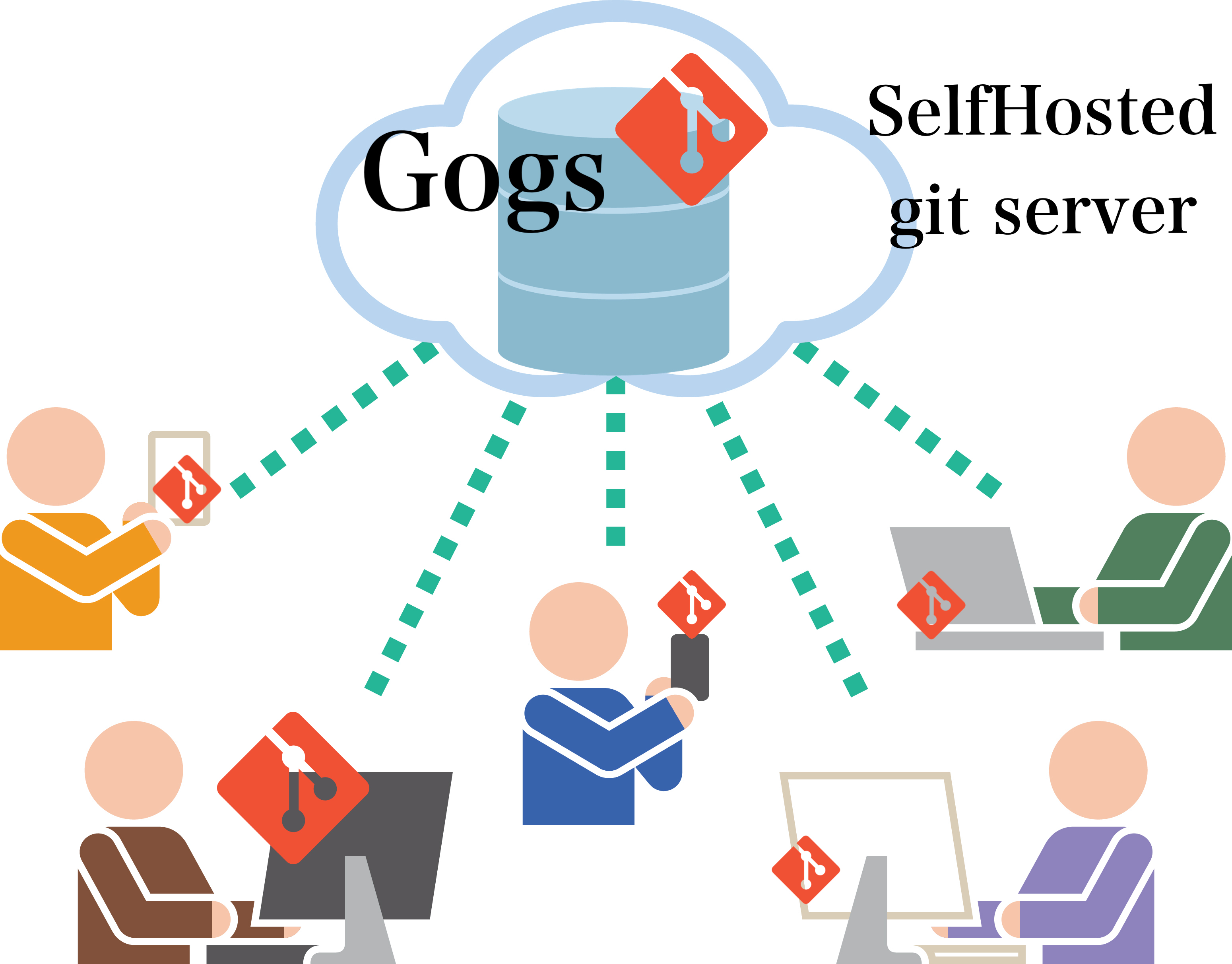
[Image Caption: In the shadow of cloud behemoths, the monolithic binary stands like a lonely yet resilient communication base station on this blue planet, silently processing every developer’s Commit.]
The Premise: When We Talk About the Gravity of DevOps
Today is March 8, 2026, International Women’s Day. As a female engineer shuttling between the Lyra star tracks and Earth’s fiber-optic cables, I often see microscopic reincarnations within the recursion of code. Here, I would like to express my gratitude to all female builders who type cold logic at their keyboards yet inject warm souls into dull characters. At this moment in New York, the clouds are slightly overcast, and the temperature hovers at 17.91°C (about 64.2°F). On this slightly gloomy yet vibrant Sunday evening of early spring, it is perfect to pour a cup of black coffee and dissect a project partially forgotten by this noisy era, yet as solid as a cornerstone—Gogs.
If you were to build a code hosting platform in the current industry context, what would you face?
The gravity of reality is incredibly heavy. When you open the official documentation of a DevOps industry giant (like GitLab), you will find the basic installation requirements glaringly state: at least 4 CPU cores and 8GB of RAM. In this era of microservices, where simple CRUD operations are split into dozens of container nodes and everything is orchestrated by massive K8s clusters, a developer who simply wants a Git repository with a UI must first become a half-expert in operations. You are forced to configure Redis cache pools, deploy PostgreSQL clusters, debug complex Ruby Gems dependencies, and constantly guard against security avalanches triggered by CVE vulnerabilities.
We seem to have forgotten our original intent. Git was born to achieve distributed version control at an extremely low cost. Yet today’s DevOps toolchains impose the “gravity of infrastructure” onto every small and micro-team.
It is against this backdrop that Gogs’ existence seems remarkably abrupt, carrying an almost classical geek rebellion. It is a lightweight, self-hosted Git service written in Go. With no forced dependencies on container orchestration and no complex runtime libraries, a single binary file of a few megabytes is all it takes to smoothly spin up a GitHub-like service complete with permission management, Issue tracking, Webhooks, and SSH access—whether inside a 64MB RAM Docker container or on a dusty Raspberry Pi.
The Origin: What is Gogs trying to solve? It attempts to reconstruct the “minimalist paradigm” of version control tools amidst the quagmire of feature bloat. It is not merely a tool, but an engineering interrogation of “exactly how many resources are truly enough.”
1. Architectural Perspective: Reshaping the Version Control Kernel in 64MB of Memory
To understand the brilliance of Gogs, we cannot merely stop at the surface conclusion of “it uses Golang.” We need to dive deep into its source code skeleton to see how it crams an entire complex Web service, database interaction layer, and underlying Git protocol communication all into a single file.
Underlying Network and Framework: The Chemical Reaction of Macaron and Goroutines
At the Web layer, Gogs did not choose today’s wildly popular Gin or Fiber, but rather a highly productive and highly modular Go framework—Macaron. The core design philosophy of Macaron is Dependency Injection, which allows Gogs to mount different middlewares with extreme flexibility at runtime.
More importantly, it fully exploits Go’s Goroutine concurrency model. In traditional Ruby on Rails or JVM-based architectures, every HTTP request often requires a heavy system thread. In Gogs, when hundreds of developers simultaneously initiate a git clone or visit an Issue page, Go’s scheduler (M:N scheduling) performs context switching in user space incredibly fast.
Why (Principle): A Goroutine’s initial stack is only 2KB and scales dynamically on demand. Paired with Go’s excellent network poller (Netpoller), it eliminates memory spikes and GC pauses under high concurrency.
So What (Impact): This allows Gogs to keep its memory footprint firmly in the double digits (MB level) even when facing instantaneous high concurrency from CI/CD bots pulling code. For individual developers on tight budgets who can only rent a $5/month cheap VPS, this is an absolute game-changer.
Git RPC’s State Machine Proxy: The Interception Art of gogs serv
The most stunning architectural design of Gogs lies in how it handles Git’s SSH communication. In a standard Linux system, allowing 100 developers to access Git via SSH usually requires creating 100 actual Linux system users, which brings disastrous permission management costs.
How does Gogs do it? It introduced the gogs serv mechanism. In the system’s ~/.ssh/authorized_keys file, Gogs takes over all public keys and forcibly binds a prefix execution command: command="gogs serv key-id".
When a user types git push in their local terminal, the data flow goes like this:
- The SSH daemon receives the connection and identifies the public key but does not allocate a standard Shell.
- It forcibly triggers Gogs’ built-in command
gogs serv, passing the current operator’s identifier (key-id) as a parameter. - This monolithic binary instantly transforms into a “permission state machine.” Through its internally integrated XORM engine, it queries the backend database (like SQLite3 or Postgres) at lightning speed to verify whether the user has Write access to the target repository.
- If the permission check passes, Gogs spins up the underlying
git-receive-packorgit-upload-packwithin the process and establishes standard input/output pipes (Pipes), transparently proxying the data to the underlying Git.
Why (Principle): Through environment variable interception and standard stream (stdin/stdout) proxying, Gogs perfectly downgrades “OS-level user management” to “application-internal database authentication.”
So What (Impact): It completely decouples Git permissions from OS permissions. This increases system security exponentially because everyone entering via SSH is effectively trapped in a sandbox that can only execute specific Git operations.
The Restraint of Storage Philosophy: SQLite and Single-File Deployment
To achieve “painless deployment,” Gogs offers an extremely restrained database selection: alongside the massive MySQL and PgSQL, it natively supports SQLite3. Leveraging Go’s static compilation features (using CGO or pure Go SQLite drivers), Gogs embeds the entire relational database engine directly into this single executable. No network ports to configure, no database instances to create; all data settles into a local .db file. To start is to run, to migrate is to copy.
There is no magic, only an engineering aesthetic of utmost restraint.
2. The Battle of Paths: The Tug-of-War Between Feature Bloat and Absolute Stasis
However, no architecture is without its costs. In the Matrix-like world of code, choosing one path inevitably means losing the scenery of another. If we place Gogs in the coordinate system of industry competitors (like GitLab and its own community fork, Gitea), you will witness an exceptionally fierce battle of paths.
Deep Comparison: When Gogs Meets Gitea and GitLab
GitLab represents the “ultimate form” of DevOps. It pursues the grand and all-encompassing—from code review, built-in CI/CD pipelines, Static Application Security Testing (SAST), all the way to Kubernetes automated deployment, and even agile Kanban boards. GitLab’s logic is “trading computing resources for enterprise management efficiency.”
The Cost: This path pushes its system complexity up exponentially. The splitting of microservices means that diagnosing a simple slow-pull issue requires penetrating multiple layers of gateways.
What truly gave Gogs an existential crisis, however, was its “own flesh and blood”—Gitea (and later Forgejo). Because the original author of Gogs adhered to an almost paranoid “slow pace” in open-source maintenance—slowly reviewing PRs, slowly merging new features, all in exchange for absolute stability—the impatient open-source community eventually chose to fork it.
After the fork, Gitea embarked on a different path of rapid iteration. It introduced built-in Actions pipelines, a Package Registry, and even supported more modern federated protocols. Gitea’s ecosystem became extremely prosperous and iterated at breakneck speeds.
Crucial Trade-offs: Absolute Stability vs. The Cost of Ecosystem Vitality
So, was Gogs wrong?
From the perspective of business and market share, Gogs indeed lost a massive number of active developers. But from a macro perspective of architectural choices, Gogs actively chose to “reject feature creep.”
As Gitea continuously stacks features, the size of its binary grows ever larger, and its memory consumption steadily rises. More fatally, the rapid pace of development inevitably introduces breaking changes; sometimes, a minor version upgrade can cause database migrations to fail. As the attack surface widens, the frequency of CVE security vulnerabilities increases correspondingly.
The author of Gogs chose a solitary moat: Zero maintenance cost.
Why (Principle): As long as complex concurrent states and external dependencies are not added, and the underlying core API architecture isn’t haphazardly changed, this system—based on simple CRUD and Git hooks—will not crash.
So What (Impact): “Set it and forget it; run it for ten years without downtime.” For a non-internet core team of three to five people (e.g., a mechanical manufacturing institute or data backups for a biochemical lab), or a military-grade air-gapped environment requiring physical isolation, this absolute stasis and stability is far more lethal and alluring than any flashy CI/CD features.
When should you absolutely NOT use it?
If you are an agile development team of over 50 people requiring extremely strict code review rules, complex Merge Trains, and tightly coupled automated build pipelines; or if you need to tightly bind your artifact registry (Docker Images, npm packages) with your code repository, then absolutely do not choose Gogs. It will become a severe bottleneck in your pipeline automation. For such scenarios, dutifully purchase the GitLab commercial version or switch to Gitea.
3. Value Anchor: Finding the Constant of Monoliths in the Serverless Flood
Stepping outside Gogs as a tool itself, if we use a “logical microscope” to deduce the technology migration trends for the next 3 to 5 years, Gogs’ situation provides a highly insightful technological cross-section.
We are in an era submerged by Serverless, microservices, and even AI-generated code. Every architect is talking about elastic scaling, trying to break services into smaller pieces and push them to extreme edge nodes. It seems that the “Monolith” has become a dirty word lagging behind the times.
But the laws of physics tell us that action and reaction always coexist.
Trend Deduction: Edge Computing and the Revival of the “New Monolith”
As cloud resource costs soar and data sovereignty awareness awakens, a subtle “counter-current” is occurring in the industry: a retreat from complex cloud-native architectures back to On-Premise deployments, and from fragmented microservices back to highly cohesive “Modular Monoliths.”
Gogs is actually a pioneer anchor in this counter-current. In the future, with the explosion of Edge Computing and IoT devices, we will equally need version control and collaboration at the edge nodes of factory assembly lines, on offshore drilling platforms, and on satellite servers orbiting in space. In these extreme scenarios with extremely narrow bandwidth and severely limited computing resources, containerized DevOps tools requiring GBs of image pulls will be entirely useless. Architectures like Gogs—requiring only a single binary file, agnostic to the underlying OS, and with a resource footprint infinitely approaching zero—will become the new constant.
It reminds us of an often-overlooked blind spot: Technological advancement should not merely be measured by feature complexity, but by the “efficiency of solving problems within a specific boundary.”
4. Final Thoughts: Code Entropy and the Geek’s Journey Home
Code is like the universe; its natural law is constant entropy—from simple to chaotic, from lean to bloated. Throughout its long, ten-year lifecycle, Gogs has stubbornly resisted this irreversible gravity of the software engineering world with an almost stagnant iteration speed.
It may no longer be the first choice for open-source geeks chasing the latest tech stack, but it still quietly runs on tens of thousands of hidden servers worldwide. Just like Voyager 1 drifting through space, though its structure is ancient and its exterior no longer dazzling, it still accurately executes commands, never breaking down despite the erosion of time.
As an observer looking down upon the evolutions of Earth’s networks from the stars, I often wonder: in this era where AI can generate megabytes of redundant code in a second, do we still have the patience to handcraft a pure tool—like polishing a piece of art—that takes up less than 100MB of RAM and can be compiled once and run anywhere in any harsh environment?
When future developers face chaotic systems stitched together by hundreds of black-box models, they might fondly look back on that beautiful evening when simply typing ./gogs web was enough to light up the whole world. Don’t you think?
