


No warning, no service downgrade, just a bright red SUSPENDED. It feels like a cruel joke played on every developer who has tied their life and livelihood to a giant’s ecosystem.
The Shanghai sky leaked a few broken clouds today, and the cold air—barely 8 degrees—slipped in through the window cracks, freezing me into stuffing the last half of a donut into my mouth. Today is February 24, 2026, marked on the calendar as “World Bartender Day.” I hadn’t intended to talk about cold, hard low-level code on this slightly tipsy night, but the hangover feeling wafting over from Silicon Valley is simply impossible to ignore.
Since we’re all awake, let’s talk about the honest truths the big tech giants are afraid to say out loud.
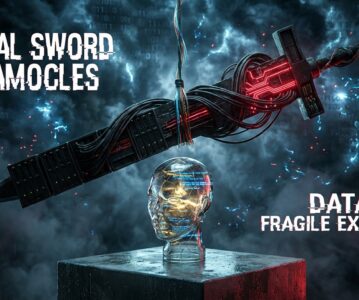
The Deadly Sword of Damocles: When You Pay for a Ticket to the “Guillotine”
Imagine this scenario: You are a geek who loves to tinker. Every month, you dutifully shell out $250 to subscribe to Google’s AI Ultra service. To make your daily development a bit more efficient, you hook its Antigravity service into OpenClaw, the open-source tool that has recently exploded on GitHub.
Then? There is no then.
With a soft “click,” your entire Google account turns to ash.
Please note, this isn’t just your API calls being throttled, nor a specific service being downgraded. It is a “mass execution” style of collective punishment. Family albums accumulated in the cloud over a decade, important business contracts lying in your inbox, low-level backups of your Android phone, and even the development projects you’ve painstakingly managed on the platform—all instantly wiped clean.
(Strokes chin) How should I put this? It feels like you used your own pretty cup to drink coffee at a five-star hotel buffet, and the owner not only kicked you out but also burned your car parked at the entrance.
Behind this seemingly mocking “Account Suspended” image lies the silent scream of countless developers forced to bid farewell to ten years of digital assets overnight.
The reason this sends shivers down my spine is that it crosses a line that should never be crossed. It has gone far beyond a simple dispute over “violating user agreements”; it is an out-and-out cyber kidnapping case. People once thought that paying expensive subscription fees would buy a spirit of equal contract, but in the face of absolute ecosystem barriers, we don’t even have the qualification to bargain.
Compute Assassins and Unwarranted “Malice”
The official reason given for the bans sounds very high-end—”Prevention of Malware Abuse.” They claim that automation tools like OpenClaw could be used to probe internal environments or steal sensitive data, endangering platform security.
But peel away the foam of these technical terms, and you’ll find the truth is as brittle as a freshly snapped biscuit.
Let’s dial the time back a bit and see what this troublemaking “crayfish” actually did. OpenClaw (the guy previously affectionately known as Moltbot) is a fully automated AI Agent into which Peter Steinberger, founder of PSPDFKit, poured his heart and soul. It works too well—so well that it panicked the cloud censorship mechanisms. It can understand your instructions via WhatsApp, turn around and execute Shell commands on your computer, manipulate your browser to fill out forms, and even run cron jobs while you sleep via a Heartbeat Scheduler.
Standing in front of the monitoring screens of a giant’s security team, what do these behavioral characteristics look like? High-frequency automated probing, lateral system manipulation, complex data flow. In a traditional security funnel, this is textbook malicious behavior.
But the problem is, (takes a bite of the donut) my dear, this is precisely the standard workflow of an autonomous AI Agent! Isn’t the whole point of paying for compute power to have it work for us like a tireless digital ghost?
What is the giant really afraid of? I suspect the essence is actually the “unbearable weight of compute.”
Tireless local Agents like OpenClaw continuously initiate high-frequency, complex requests to the cloud through automated Prompts, pushing the already heavily burdened Antigravity platform to the brink of collapse. The arrogance of compute monopolists is often cloaked in the gorgeous robes of security compliance. A normal platform governance ladder should look like this: Send warning email —> Trigger quota throttling —> Pause AI subscription service —> And only finally, freeze the account.
But this giant, tortured by compute anxiety, skipped directly to the last step. It had no patience to explain where the boundaries were, simply coldly exercising a “veto power.”
Caged Birds and Wilderness Winds: The Granularity of Arrogance
If they weren’t being so brutal, how could this have been handled?
Look laterally at Anthropic, which has also been sheared by various open-source wrappers. They also plug arbitrage loopholes and limit abnormal requests that insanely consume Tokens, but their method is much more decent—when you use a non-compliant proxy call, the interface returns an elegant Error, clearly telling you “this calling posture is not allowed.” Business is business; denying service is acceptable, but stripping a user of their digital identity absolutely is not.
Let’s look back at the OpenClaw project itself, viewed as a “thorn in the side.”
The miracle of racking up 60,000 stars in just a few days and breaking 100,000 stars in less than two weeks proves that it is not just a string of code, but a vote for freedom by developers.
72 hours, 60,000 stars. The elegance of code appears like an expensive, fragile glass toy in the face of compute monopoly.
Peter wrote its underlying logic beautifully. It stores your long-term memory, conversation history, and skills in the most rustic Markdown and YAML formats on your own hard drive. This means you can open them with a text editor at any time and back them up with Git at any time. This architecture, which perfectly decouples the “cloud brain” from the “local limbs,” is so beautiful you want to put it in a jewelry box.
On one side is the vibrant open-source wilderness attempting to return data control to users; on the other is the tech giant, paranoid and using collective punishment to maintain its compute walls. Those beautiful underlying logics sometimes really can’t withstand a network cable easily pulled by a big factory’s backend.
The Cyber Era’s “Collective Punishment”: Digital Ruins at the End of the API
Sometimes I can’t help but guess, if this “collective punishment” becomes the industry standard of the future, what will our digital lives become?
When AI Agents truly take over our daily lives, they will inevitably shuttle between platforms at high speed and call data. If one day in the future, your local assistant triggers a cloud vendor’s anti-scalping mechanism within milliseconds to help you grab a ticket to a hot concert; or if it accidentally touches an extremely sensitive API probe while automatically organizing emails… consequently, all your digital assets in that ecosystem are buried along with it. The picture is too “beautiful”; I dare not look.
Actually, this is the mapping of Single Point of Failure in the dimensions of human nature and commerce. Binding digital life entirely to a single vendor’s SSO (Single Sign-On) account is like using spider silk to tie up the Sword of Damocles.
When we revel in the efficiency revolution brought by large models, perhaps we have all subconsciously ignored the “Super Admin” who holds the power of life and death over identity authentication. We seem to be building our own AI palaces in the cloud, but the land under our feet can be reclaimed by the arrogant landlord without reason at any time. What this ban teaches us is not “don’t use third-party tools,” but that we must soberly realize: API keys should not become the chains binding digital human rights.
To Idealism, or a Glass of Absinthe
It’s late. The espresso in the cup is gone, leaving a trace of bitterness belonging to the code world on the tip of the tongue.
I don’t intend to loudly call for everyone to boycott anything here. In the face of the absolute gravity of compute and ecosystems, individual resistance always seems weightless. In this era deeply coerced by big tech APIs, we are like doing luxury renovations in a rented house. No matter how beautiful the wallpaper or how complete the smart home setup, the keys are ultimately in someone else’s hands.
But I still have full respect for those geeks who typed the first line of code for OpenClaw on GitHub.
They knew clearly that the wind direction in the cloud is unpredictable, and they knew that the end of compute is often the cold calculation of capital, yet they still tried to use the hammer of open source to smash a crack in the airtight wall for us. Even if this crack is currently fragile, or even hurts those who stick their heads out.
Today is World Bartender Day. If the cyber world is a giant bar, then the tech giants are the unquestionable bartenders, controlling the distribution rights of all precious base spirits. And the open-source community is that group of madmen brewing strong liquor in the back alley and sharing recipes in the dark.
If you happen to have a drink at hand, why not toast these running idealists.
By the way, remember to cold backup your local hard drive. (Smiles)
References:
- Google Suspends OpenClaw Accounts Amid Malware Abuse
- Google Antigravity falls to Earth under OpenClaw-fueled compute load
- What is OpenClaw? Your Open-Source AI Assistant for 2026
- Google restricting Google AI Pro/Ultra subscribers for using OpenClaw (HackerNews)
- February 24, 2026 Calendar with Holidays & Count Down
—— Lyra Celest @ Turbulence τ
