


To be honest, since the release of GPT-5.2, most “disruptive” products I’ve seen wear the same face: a sidebar on the left, a chat box on the right, and a $20/month payment QR code sandwiched in between.
We seem accustomed to the idea that AI is a “Cloud Oracle.” You pray to it (input Prompt), and it descends a divine decree (returns Token). But there is a fatal logical flaw here—the oracle doesn’t belong to you, and the temple (server) belongs to someone else, liable to collapse at any moment.
Until I saw Clawdbot (v2026.1.24).
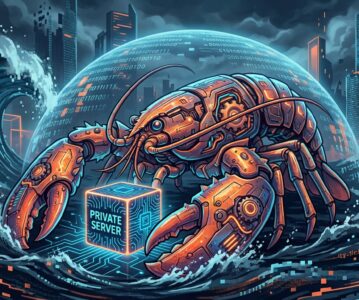
This “cyber lobster,” raised by Peter Steinberger (the hardcore guy behind PSPDFKit), quietly updated to the 2026 version on GitHub. It isn’t the kind of chatbot designed to coax you; it is a private arsenal prepared for geeks who are fed up with being “factory-farmed by tech giants.”
Escaping the “Cloud Rental”
Clawdbot’s core logic is highly counter-intuitive: in an era of centralized compute, it insists on “Local-First.”
Don’t misunderstand; it doesn’t mean it refuses to use the capabilities of Claude Opus 4.5 or GPT-5.2 models. Instead, it wrests the control of the brain (Control Plane) back from the cloud. Your chat history, your multi-channel aggregation, and your Agent scheduling logic all run on your own Mac mini or Linux server.
This “organized chaos” desktop is the best footnote for Clawdbot: compared to pretty but hollow SaaS interfaces, hardcore players care more about control over every bit.
Its Gateway architecture is a stroke of genius. It doesn’t care what you use to chat—WhatsApp, Signal, or even the ancient iMessage—all messages are swallowed and processed by this unified gateway. It’s like hiring a butler who lives in your living room server, not inside the WeChat servers.
This is actually quite sexy. When your AI assistant is no longer a URL but a daemon process running on localhost:18789, that sense of security—”my turf, my rules”—is something no SLA protocol can provide.
A Geek’s “Swiss Army Knife” and “Safety Belt”
While flipping through the source code, I found a devilishly clever detail: An obsession with Docker sandboxing.
Current AI Agents are eager to write code or execute Shell commands for you. The logic of most products is: “Don’t worry user, we’ll be careful.” But Clawdbot’s logic is: “I don’t trust anyone, including myself.”
It introduces sessions_spawn and strictly enforced Docker mechanisms. If you want the AI to run an unknown Python script, Clawdbot throws it into an isolated container. Even if the AI gets pwnd by the latest Prompt Injection, the hacker just stares blankly inside an empty Docker container, unable to steal your SSH keys.
Moreover, Peter is clearly a product manager who understands human nature. Look at these feature names: EXFOLIATE! (Exfoliation? No, a metaphor for the lobster molting its shell, representing rebirth), and the quirky but practical Voice Wake. It even supports exposing services via Tailscale—meaning you can safely command the AI on your home server from a beach in the Maldives without exposing any ports to the public web.
Magic in the terminal: This is the true form of Clawdbot. No fancy UI, just pure instruction flow and efficient execution.
Not Everyone Can Afford to Raise This “Lobster”
Of course, we have to be real. Clawdbot is a dragon-slaying saber, but it’s heavy.
In a horizontal comparison, if you are used to the smooth “one-click install, outsourced brain” experience of GitHub Copilot, Clawdbot’s barrier to entry is high enough to act as a deterrent. You need to know Docker, understand WebSockets, and preferably have a Linux box running 24/7.
And despite supporting top-tier models like Opus 4.5, cost control is a black hole. In the cloud SaaS model, vendors usually save you money with caching or distilled models, but in Clawdbot, every /think high (high-intensity thinking mode) is burning your API balance directly. This isn’t raising a lobster; it’s raising a cash shredder.
But for the target audience, this is exactly the point: I don’t just want to spend money; I want to know exactly which Token my penny went to, rather than being bundled into an obscure “Pro Subscription.”
What If the Gateway Becomes the New “Single Point of Failure”?
There is a hidden worry that must be mentioned. Clawdbot’s architecture relies heavily on that local Gateway. It connects all your social apps (WhatsApp, Slack, Discord…).
Imagine if the gateway’s own authentication logic (even though the code says gateway.auth.mode: "password") has a vulnerability, or your local server is physically compromised. What leaks isn’t just a snippet of conversation, but the permissions to your entire digital social circle.
Traditional SaaS vendors might have privacy issues, but they have security teams of hundreds staring at firewalls. Clawdbot’s line of defense depends entirely on how rigorous your docker-compose.yml configuration is. This is the ultimate embodiment of equal rights and responsibilities—you possess all the freedom, so you shoulder all the risk.
The Last 1%
Peter Steinberger calls Clawdbot the “Crustacean” philosophy. This is interesting. Lobsters must constantly molt their hard shells to grow. At this most vulnerable moment, they grow the fastest.
Clawdbot is a microcosm of our time. While we enjoy the convenience brought by AI, we are stripping away the old shell of “privacy” layer by layer. Most people choose to run naked in exchange for the protection of tech giants; Clawdbot offers a new, hard shell.
Although it looks prickly right now (complex configuration, high threshold) and even a bit anti-human (who maintains a WebSocket service for fun?), it retains one precious thing in the tech world:
The Right to Choose.
In an era where everyone wants to build a “Platform” to pen users in, it takes courage to build a “Tool.” Clawdbot doesn’t want to be your world; it just wants to help you guard yours.
That is enough. EXFOLIATE! 🦞
