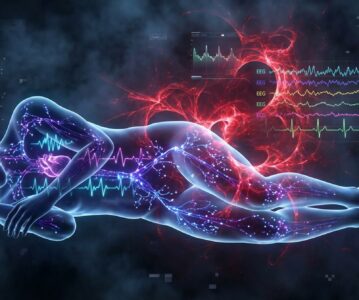
Sleep is not just rest; it’s an encrypted broadcast sent by the body. Stanford’s newly released **SleepFM Clinical** model successfully predicts risks for over 130 diseases—including heart disease, dementia, and even cancer—by analyzing polysomnography (PSG) data. Unlike smartwatches that only see “deep vs. light sleep,” SleepFM utilizes a “synesthetic” capability trained on 585,000 hours of data to capture tiny physiological coordination signals invisible to human doctors. This research not only evolves sleep monitoring from “recording” to “early warning” but also sparks deep reflection on biological privacy and insurance pricing—when your dreams can forecast your lifespan, are you ready to face the answer?