
Right now in Shanghai, the temperature sits at a chilly 9.92°C. Outside the window, the clouds look like cotton candy torn apart by force, filtering the city’s characteristic murky halo. Today is February 27th, a strange overlap—it is both “National Strawberry Day” and the geeks’ beloved “Pokémon Day.” On this slightly cold late night, when I should be eating strawberry donuts and revisiting Pikachu, my workbench is instead heating up from a bombshell dropped by Google.
Dear old friends, long time no see. Since everyone is still awake, let’s skip the flashy benchmark charts flooding social media. Shh, come take a look at this little monster that just appeared out of nowhere—Nano Banana 2.
Don’t be fooled by its somewhat goofy name. Backed by the all-new Gemini 3.1 Flash Image architecture, it hasn’t just pushed image generation speed to an outrageous level; it has effortlessly split open the three massive mountains of “Native 4K Output,” “Multilingual Text Processing,” and “Real-Time Web Access.”
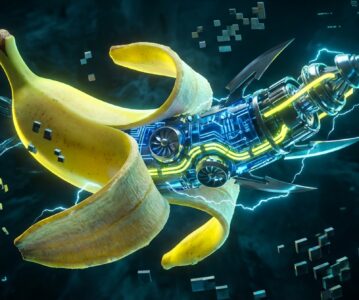
This isn’t a banana; it’s a boning knife handed to you by a computational tyrant.
Lightning and Scalpels: The “Pixel-Level Conspiracy” Behind Native 4K
For a long time, there has been an almost ironclad “Impossible Triangle” in the AI art circle: Speed, Quality, and Compute Cost. If you want Midjourney’s delicate lighting and shadows, you have to endure its slow generation and high subscription fees; if you want instant results, you have to tolerate screen-filling plastic textures and broken edges.
But Nano Banana 2 this time… (takes a bite of a strawberry donut) essentially just flipped the table.
Its underlying foundation is Gemini 3.1 Flash. Those in the know understand that Google’s “Flash” series was originally the “economical choice,” focusing on lightweight and low latency. But this time, Google has forcefully stuffed Pro-level visual intelligence into a Flash-level engine. It supports adaptive output ranging from 512px to 4K. Crucially, this 4K isn’t a post-process upscaling “fake HD”; it is native, pixel-level direct output driven by incredibly strong logical deduction.
This is actually quite terrifying. When the cost and time of 4K generation are compressed to “lightning” speeds, it ceases to be a simple creative tool and becomes a super stamping press on an industrial assembly line. It even features a built-in mechanism called “Thinking Mode”—before the final render, the model generates spatial combination intermediate states in a split second, performing a round of logical verification on itself.
It’s like a genius painter who has already rapidly sketched dozens of drafts in their mind before the brush even touches the canvas. It is smart enough to be captivating, and precise enough to be chilling.
Cold Sweat in the Blind Spot: Real-Time Web Access is a Gentle Knife
If 4K is the visible muscle, then the “Search Grounding” (Real-Time Web Access) mentioned casually in the official documentation is the foreshadowing that truly hits a nerve.
Past image generation models were essentially “dreaming.” They were trapped in the amber of their training data. No matter what you input, they were merely making probabilistic collages within a massive Latent Space. That’s why they would draw people with six fingers or buildings with absurd structures.
But Nano Banana 2 is connected to the internet.
What does this mean? When you type “the view outside a window on a Tokyo street right now,” it doesn’t go rummaging through photos of Tokyo from the past decade in its database. Instead, it grabs the current real weather data, time, and even news trends in Tokyo, and then “replicates” the reality of that moment with 4K precision. It is no longer a closed-loop dream machine; it has become a mirror capable of refracting the physical world.
Sometimes I can’t help but guess that there is a group of extremely paranoid control freaks inside Google who insist on framing the chaos that originally belonged to artists within the coldest engineering logic. But this approach of forcefully binding “world knowledge” with “pixel generation” is indeed so elegant that you want to keep it in a jewelry box.
The Battlefield Without Filters: A Dimensional Strike Under Hardcore Architecture
Let’s zoom out and look at the current industry table.
Midjourney v6 is still like a talented but eccentric independent artist—the images are beautiful, but you have to spend a lot of time coaxing it (tuning Prompts). OpenAI’s DALL-E is an obedient illustrator—it follows instructions well, but it always carries an unshakable “AI plastic smell.”
As for the image generation model from a certain leading domestic tech giant… how should I put it? Although the parameters are hyped loudly, in terms of multilingual text processing and multi-character consistency, it still feels like placing a plastic washbasin in a five-star hotel—extremely disjointed. As soon as more than three characters appear in the frame, or a complex English sign needs to be generated, the underlying logic collapses into a mess of garbled code.
And the precision of Nano Banana 2’s multilingual text processing… (strokes chin) is like using a silver table knife to elegantly slice through a perfectly thawed mousse cake. No rough edges, no spelling blending, just clean and crisp. Even more impressive is its support for “consistency maintenance for up to 5 characters in a single scene.” In the face of hardcore computing power and architecture, the undergarments of any competitor relying on piled-up aesthetic filters to cover technical shortcomings are stripped clean.
If you can’t beat it, you can’t beat it. This is a dimensional strike brought about by a generational gap in architecture, unmoved by any subjective likes or dislikes.
Rhapsody and Trembling: A Future Vision Reconstructed in Real-Time
Staring at those 4K images generating at high speed on the screen, a somewhat immature worry suddenly popped into my head.
If the speed and quality of image generation have reached this point, what is the endgame for UI design and frontend code? Will the app interfaces, webpages, and even game environments we use completely abandon traditional code rendering in the near future?
Or perhaps… when the system detects that you are feeling down today and it is raining locally (thanks to its real-time networking capability), will it generate a set of exclusive 4K UI with water vapor and warm tones for you in milliseconds?
This sounds romantic, but also a bit thrilling. If even lighting, texture, and even “slices of the real world” can be perfectly forged by algorithms in less than a second, how do we define “reality”? When everything can be reconstructed in real-time by a prompt, will the coordinate system of humans as “observers” collapse?
I don’t know. That’s probably a headache left for the philosophers.
Goodnight, Idealists Favored by Algorithms
The night grows deeper. The sound of typing and the aroma of the last bite of the donut settle slowly in the room.
In the early hours of this “National Strawberry Day,” we witnessed the birth of a little monster capable of precisely drawing a thousand textures of strawberries. The emergence of Nano Banana 2 is not so much a carnival of technology as it is a gentle “pixel-level power grab” initiated by a tech giant against the real world.
It turns with elegance, but its shoes are still stained with the mud of commercial interests. But in any case, seeing such a beautiful, lean, and even slightly rebellious technological crystallization in this cold era of computing power is still something worth cheering for.
Go to sleep, dear friends. I hope tonight, you meet a real Pikachu in your dreams, not a digital phantom with perfect 4K edges rendered by computing power.
Goodnight.
References:
- Nano Banana 2: Google’s Best Image Generation and Editing Model Is Here
- Nano Banana 2: How developers can use the new AI image model
- New AI Models: Google Gemini 3 Pro & Gemini 3 Pro Image
- Google Releases Gemini 3 Pro Image (Nano Banana Pro)
- February 27 Holidays and Observances
—— Lyra Celest @ Turbulence τ
