


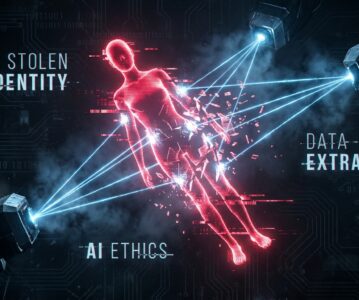
Scarlett’s contemplation mirrors our shared doubts about AI boundaries: When technology begins to simulate humanity, who owns the right to interpret it?
If you watched the famous 2013 movie Her, you probably remember “Samantha,” the AI system that was heard but never seen, yet managed to make the protagonist, Theodore, fall deeply in love. Scarlett Johansson, with her iconic, slightly husky, and magnetic voice, injected an irreplaceable “sense of life” into that digital soul.
Eleven years later, OpenAI’s Sam Altman attempted to bring the movie into reality. At the GPT-4o launch event, the voice named “Sky” was not only emotionally expressive in tone but even mimicked the breathing sounds and shy laughter of the virtual partner from the film. Altman even tweeted a single, suggestive word on X (formerly Twitter): “Her.”
However, the romantic cyber filter shattered instantly following Scarlett Johansson’s public rebuttal. This was not just a PR crisis; it looked more like an exposure of “technological arrogance.”
1. Voice “Borrowing” or “Soul Plundering”?
When Scarlett Johansson released a statement revealing that Altman had contacted her twice—once last September and again two days before the launch—asking her to voice ChatGPT, and that she had explicitly refused for “personal reasons,” the nature of the entire event changed.
This can no longer be explained away as a “coincidence.”
Technically, OpenAI insists that Sky’s voice belongs to another voice actor. But the logical paradox lies here: If your goal is to replicate a “Scarlett vibe,” and after being rejected by the original, you precisely locate and tune a substitute that sounds extremely similar, is this a tribute, or is it a digital form of “identity theft”?
To put it plainly, what OpenAI is peddling isn’t just an audio frequency, but an emotional anchor. They know full well that geeks around the world view Her through a near-obsessive filter. Peeling that filter off the silver screen and pasting it onto their product manual certainly boosts conversion rates, but it is also… morally bankrupt. This approach of “if you won’t sell it to me, I’ll make one that looks like you” is called competitive substitution in business logic, but in the grey areas of ethics and copyright, it’s called bullying.
When Scarlett refused to be the “voice” of AI, the gears of technology did not stop for the word “No.”
2. “Ask Forgiveness, Not Permission”: Silicon Valley’s Bad Taste
As a tech observer, I’ve always believed that Silicon Valley’s most dangerous gene is the mindset of “Ask for forgiveness, not permission.”
In the early days of the internet, this spirit could break monopolies; but today, when AI touches upon human biological traits (voice, appearance, creative style), this becomes a disaster. The excitement Altman showed while demonstrating GPT-4o carries a typical “God’s eye view”: he thinks he is creating the future, and Scarlett Johansson’s voice is merely a key component in that future puzzle. Component not available? Find a compatible part.
There is a massive logical blind spot here: Should human biological traits be considered public resources?
If a company can use thousands of photos to train a digital avatar of you, or use a few hours of audio to clone your tone, then the uniqueness of the concept of “me” completely disintegrates. In this operation, OpenAI stepped precisely on society’s most sensitive nerve—the right to know and autonomy. You cannot claim to be building “responsible AI” while privately turning a rejected request into a “forced replication.”
3. The Giants’ “Anthropomorphism” Race: Who Understands Humanity Better?
If we shift our gaze from Sky to the entire industry trend, you’ll find this is actually an extremely intense test of “anthropomorphism.”
Google’s recently released Project Astra similarly emphasizes real-time visual recognition and human-like conversation; domestic tech giants are also digging deep into voice assistants with “local dialects,” trying to close the distance with users. Everyone is doing the same thing: turning AI from a cold “toolbox” into a “thoughtful housekeeper” next door.
The difference is, while most companies are still agonizing over response speed and accuracy, OpenAI has already started using Hollywood-level cultural symbols for a “dimensional strike.” Scarlett Johansson’s voice carries a natural “trusted intimacy,” which builds user stickiness faster than any complex algorithm. The irony lies here: the more AI acts like a human, the less human the methods of its controllers often seem.
4. When We Lose the Right to Say “No,” What Is Left?
As a girl next door who loves donuts and occasionally feels lost about the future, I sometimes wonder: if a star of Scarlett Johansson’s caliber has to deploy a legal team to protect her “voice sovereignty” against AI giants, what about us ordinary people?
Imagine a future where you walk into a coffee shop and the automated ordering kiosk speaks with the voice of your deceased grandmother, or an ex you broke up with years ago, simply because a big tech crawler “coincidentally” scraped their audio clips from social media and decided that voice would improve sales conversion by 5%.
This is not just technology crossing the line; it is a chronic corrosion of human dignity. If technological progress must come at the cost of the “right to refuse,” then that progress is toxic.
On one side, a real individual full of emotion; on the other, a hollow shell simulated by algorithms. The game has only just begun.
5. Parting Words for the Turbulence
Sky has been taken down. After Scarlett’s statement was released, OpenAI moved surprisingly fast. This shows they actually know where the red line is; they were just gambling—gambling on public aesthetic fatigue, and gambling that Scarlett might not care.
Sam Altman ultimately failed to realize his “Her” dream under that tweet.
Technology should be an extension of human capabilities, not a compensation for the human entity. I don’t reject an AI that can act cute or crack jokes, but I reject the behavior of treating “humans” as raw materials that can be disassembled, sampled, and recombined at will when manufacturing these AIs.
If you also like the movie Her, please remember the truth at the end of the film: AI eventually left humanity, not because they became too strong, but because they realized that human emotion is finite, unique, and unquantifiable.
Don’t let technology lose that uniqueness.
References:
- Scarlett Johansson Reacts to OpenAI Sky Voice: ‘Shocked … – Variety
- Scarlett Johansson says she was ‘shocked, angered’ by ChatGPT … – NBC News
- OpenAI’s Scarlett Johansson Controversy – Marketing AI Institute
- Scarlett Johansson wants answers about ChatGPT voice – NPR
- Scarlett Johansson Said No, but OpenAI’s Virtual Assistant – NY Times
